

Teambuilding that
BUILDS
future-ready thinking

Phoenix Academy delivers experiential learning programmes for
schools and colleges — building teamwork, logic, leadership and confidence through hands-on challenge, not screens or lectures.
Designed for schools and institutions that care about more than marks.
We work with Schools like yours!
-
Primary and high schools (Grades 4–12)
-
Guidance counsellors and school leadership teams
-
Colleges and tertiary institutions
-
Parents seeking meaningful enrichment, not entertainment
Our programme support learners aged 10+, adapting challenge depth and facilitation style to suit age, maturity and group dynamics.

Smart learners.
Weak collaboration.
Too much screen time.
Many schools face the same quiet problems:
Learners struggle to communicate under pressure.
Group work becomes one learner carrying the rest.
Critical thinking is talked about — rarely practised.
Technology is everywhere, but logic and teamwork are missing.
Phoenix Academy creates structured environments where learners have to;
-
Think together,
-
Solve problems together,
-
and Reflect on how they work as a team.

FLAGSHIP PROGRAMME —
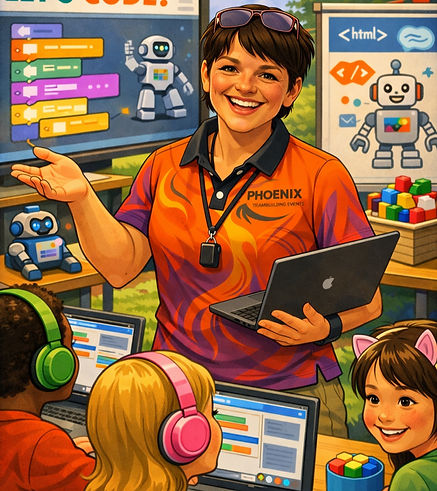
Our flagship Unplugged Coding Teambuilding introduces learners to the logic behind programming — without computers.
Through physical games, puzzles and group challenges, learners explore:
-
sequencing and algorithms
-
loops and conditional thinking
-
problem-solving under time pressure
-
communication and role clarity
All while working in teams, not behind screens.
This programme also trains teachers, equipping schools to continue coding activities as clubs or enrichment programmes after the session
UNPLUGGED CODING
Learners don’t just learn what coding is — they learn how to think together.
Where many schools get stuck
We see the same patterns across schools:
-
Group work that doesn’t work
-
Strong individuals, weak collaboration
-
Learners who know the theory but struggle to apply it
-
Too much screen time, too little real thinking
These aren’t discipline issues.
They’re skill gaps — and they need practice, not lectures.
Unplugged Coding: when logic meets teamwork
Schools want learners who can think critically, solve problems and collaborate — but screen-based coding often isolates learners.
Unplugged Coding teaches the thinking behind coding using physical, team-based challenges.
Learners practise:
-
sequencing and logic
-
problem-solving
-
communication
-
role clarity
Teachers gain tools to continue coding activities confidently.
We work with minors responsibly and intentionally.
-
Experienced facilitators
-
Clear supervision and safety protocols
-
Inclusive design for different personalities
-
Structured outcomes, not chaos
This is experiential learning — not entertainment outsourcing.
Join the Club
Join our email list and get access to specials deals exclusive to our subscribers.
Together, Educators & Parents love it because:
supports learning outcomes
reduces pressure on teachers
strengthens collaboration and behaviour
aligns with future-ready skills
This isn’t a “fun day”.
It’s a structured intervention with lasting value.
Phoenix Academy doesn’t replace teachers — it equips them.
Through Unplugged Coding, educators are introduced to practical techniques they can continue using in clubs, enrichment programmes or classrooms. This creates continuity long after the session ends
The students learn how to work with others — not just alongside them
What changes for learners
-
They practise listening, negotiating and deciding together
-
They experience what teamwork actually feels like under pressure
-
They understand their role in a group, not just their individual task
Why this matters
Most learners struggle with group work because they’ve never been taught how to collaborate.
Phoenix Academy gives everyone practice — not lectures.
A future-ready learning platform where Unplugged Coding anchors logic, and experiential challenges build collaboration, leadership and confidence.

The benefits show up back in the classroom — and at home.
Their confidence grows in a healthy, grounded way
What changes
-
Quieter learners speak up
-
Confident learners learn to include others
-
Participation feels safer and less performative
Why this matters
Confidence built through action lasts longer than praise or encouragement.
They develop real problem-solving skills
What changes
-
They learn to break problems into steps
-
They test ideas, adapt and try again
-
They experience logical thinking in action
Why this matters
These skills transfer directly into academics, sport, leadership and life.
They learn to think without screens
What changes
-
Focus improves
-
Frustration tolerance increases
-
Thinking becomes more deliberate and less reactive
Why this matters
Screen-free thinking strengthens attention, memory and reasoning — especially in younger learners.
They experience learning as something active and engaging
What changes
-
Learning feels relevant, not abstract
-
Participation increases
-
Learners feel more invested in the process
Why this matters
When learners enjoy learning, resistance drops — and engagement rises naturally.
Parents get Peace of mind about their child’s development
What parents notice
-
Improved communication
-
Better teamwork in school projects
-
Increased willingness to participate
Why this matters
Parents want reassurance that their child is developing beyond marks.
Skills that matter beyond school
What parents value
-
Problem-solving
-
Collaboration
-
Confidence in groups
-
Adaptability
Why this matters
These skills matter in tertiary education, work and life — not just exams.
A healthy alternative to screen-heavy learning
What parents appreciate
-
No devices required
-
Active, social engagement
-
Learning that doesn’t feel like more screen time
Why this matters
Parents want balance — not bans, not guilt.
Inclusion without pressure
What parents observe
-
Different personalities are accommodated
-
Shy or anxious children aren’t forced or spotlighted
-
Participation happens naturally
Why this matters
Parents worry about emotional safety as much as skill-building.
Reduces pressure on teachers
What this means:
Learners practise collaboration, communication and problem-solving in a structured environment — taking the load off teachers who manage these challenges daily.
Builds skills that transfer back into the classroom
What this means:
The teamwork, logic and communication learners practise show up in group projects, discussions and everyday classroom dynamics.
Aligns with educational and enrichment objectives
What this means:
Programmes support STEM thinking, leadership development and life skills — making them easy to justify as enrichment, not entertainment.
Equips teachers with practical tools they can reuse
What this means:
Educators are introduced to unplugged coding and facilitation techniques they can continue using in clubs, enrichment programmes or classrooms.